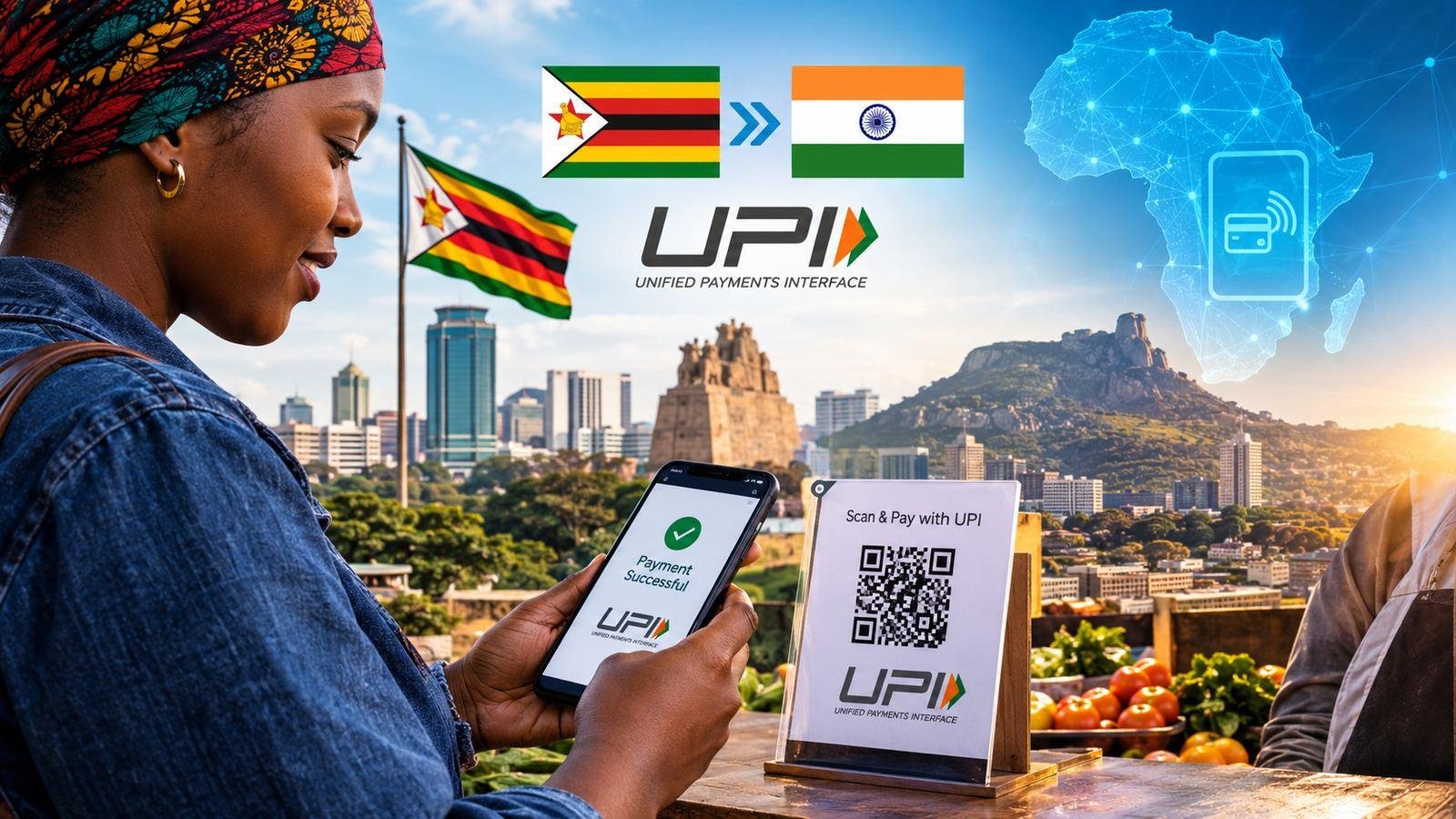

The Unified Payments Interface (UPI) technology developed by India is gaining international attention. Recently, the African country of Zimbabwe is in talks with India to use UPI technology to completely revamp its payment system. To this end, a report has revealed that Zimbabwe is in talks with NPCI International Payments Limited (NIPL), the international arm of the National Payments Corporation of India (NPCI).
If this agreement is implemented, it will allow banks, mobile money operators and fintech companies in Zimbabwe to come together on a single platform and make real-time payments. This will not only significantly reduce transaction costs, but will also increase the speed of money transfers, said Reserve Bank of Zimbabwe Governor John Mushayavanhu. He believes that it will serve as an alternative to debit and credit cards for small domestic transactions. He said that the ongoing discussions with NIPL are likely to reach a conclusion by October 31 this year.
Currently, the number of digital transactions in Zimbabwe is significant. In the fourth quarter of 2025, 238 million electronic transactions were recorded across the country, of which 87 percent were made through mobile money. However, the cost of these transactions is high. Especially for funds sent from abroad, heavy charges are being levied. According to World Bank estimates, in 2025, the average cost of sending $200 to African countries will be 8 percent, compared to the global average of 6.5 percent. According to the Sustainable Development Goals, this cost should not exceed 3 percent. If a system like UPI is available, these costs will be reduced and exploitation by middlemen will be curbed. The fact that
Indian UPI technology will have a share of 49 percent of the world's total real-time transactions by 2025 is a testament to its potential. Apart from Zimbabwe, other African countries like Ghana, Uganda, Rwanda, and Mozambique are also showing interest in UPI technology. If these countries adopt UPI, it has the potential to become the standard for the rest of Africa.
UPI in Africa's payments system.. Zimbabwe in talks with India